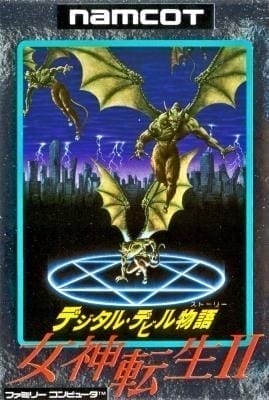
Digital Devil Story: Megami Tensei II
Digital Devil Story: Megami Tensei II is a first-person dungeon-crawling RPG developed by Atlus and published by Namco for the Famicom/NES. Serving as the direct sequel to the 1987 original, it takes place decades after the events of the first game in a post-apocalyptic Tokyo devastated by a nuclear war. The protagonist awakens in a strange laboratory with no memory of his past, guided by a mysterious computer program that tasks him with gathering demon allies to restore the world. The game dramatically expanded upon its predecessor's mechanics, introducing the now-iconic Law-Neutral-Chaos alignment system and a more sophisticated narrative structure.
Game Controls
About This Retro Game
Released on April 6, 1990, Digital Devil Story: Megami Tensei II represented a monumental leap forward for the fledgling Megami Tensei series. While the original established the core concepts of demon negotiation and fusion, the sequel refined every aspect of the formula and introduced philosophical depth that would come to define the franchise. Developed during a period of creative experimentation at Atlus, the game was directed by Cozy Okada and featured a darker, more ambitious narrative that dealt with themes of apocalypse, religious conflict, and the nature of free will. Unlike its predecessor, which was directly tied to Aya Nishitani's novels, Megami Tensei II forged its own path, setting the stage for the eventual Shin Megami Tensei sub-series.
The game's most significant innovation was the introduction of the alignment system, a three-way moral axis that would become the defining feature of the Megami Tensei lineage. Throughout the adventure, player choices—in dialogue, quest decisions, and even demon recruitment—would shift the protagonist's alignment toward Law, Neutral, or Chaos. This alignment determined which demons could be recruited, which NPCs would offer assistance, and ultimately which of the game's multiple endings would be reached. The system encouraged multiple playthroughs and gave players unprecedented agency in shaping their own narrative experience.
Megami Tensei II vastly expanded the scope of its predecessor. The game featured a larger overworld representing a ruined Tokyo, accessible by foot, train, and eventually aircraft. Players navigated through diverse environments including the shattered remains of the city, underground tunnels, and the mysterious Valhalla Corporation headquarters. The demon roster expanded to over 150 species drawn from global mythologies, and the fusion system was refined with the addition of fusion inheritance, allowing newly created demons to inherit spells and abilities from their parent components. The moon phase system returned with enhanced complexity, affecting not only negotiation but also enemy behavior and item availability.
The soundtrack, composed by Tsukasa Masuko, was another highlight, featuring a distinctive electronic-industrial style that complemented the game's post-apocalyptic aesthetic. Tracks such as the overworld theme and the battle music became fan favorites and established a musical identity for the series. Upon release, Megami Tensei II received critical acclaim in Japan, with reviewers praising its narrative ambition, mechanical depth, and challenging gameplay. While it was never officially localized outside Japan, its influence on later titles—particularly Shin Megami Tensei—is immeasurable, and it remains a cult classic among RPG enthusiasts who appreciate its historical significance and uncompromising design philosophy.
Recommended Based on Your History
Related Retro Games
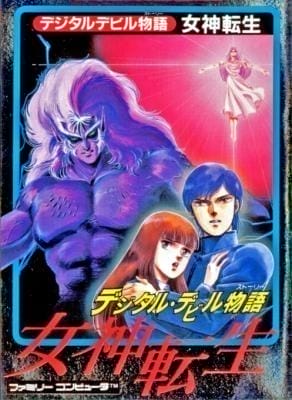
Digital Devil Story: Megami Tensei is a first-person dungeon-crawling RPG developed by Atlus and published by Namco for the Famicom/NES. Based on Aya Nishitani's horror novel series, it tells the story of Akemi Nakajima, a high school computer prodigy who creates a demon-summoning program. Seeking revenge on bullies, he inadvertently unleashes the Norse god Loki upon Tokyo. Together with Yumiko Shirasagi—a transfer student who is the reincarnation of the goddess Izanami—Nakajima must navigate labyrinthine demon realms, recruit demons as allies, and undo the chaos he has caused.

A unique 'what-if' scenario spin-off of the Shin Megami Tensei series, set in a demon-infested high school. Features moral alignment system and demon negotiation mechanics.
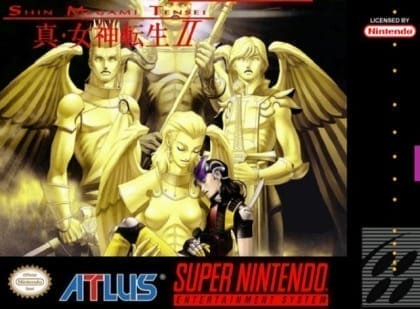
The apocalyptic sequel set in a post-nuclear Tokyo where you recruit demons to battle in a war between God and Lucifer, featuring deep moral choices that shape the world's fate.
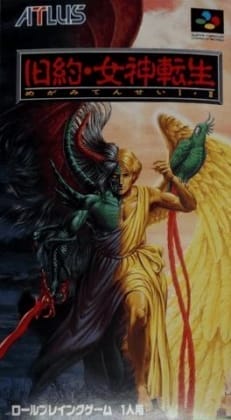
A SNES remake combining the first two Megami Tensei games (Digital Devil Story 1 & 2) with enhanced graphics and gameplay systems. Features demon fusion and dungeon crawling in a post-apocalyptic Tokyo.
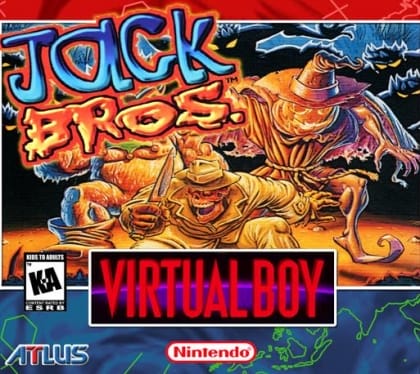
Jack Bros is an action-puzzle game developed by Atlus for the Virtual Boy in 1995. Featuring characters from the Megami Tensei series, it combines maze navigation with real-time combat in a unique stereoscopic 3D environment.
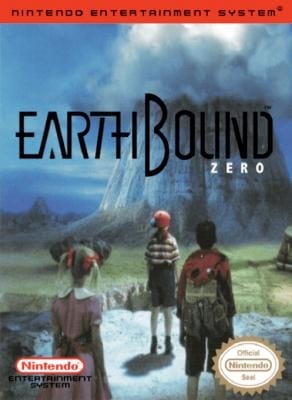
EarthBound, known as Mother in Japan, is a role-playing video game developed by Ape Inc. and HAL Laboratory, and published by Nintendo. The game follows Ness, a young boy with psychic abilities, and his friends as they journey across the world to collect melodies and defeat the cosmic horror Giygas.